Sargassum impact on punta cana beaches
By Punta Cana transfer
Sargassum mats blanketing Punta Cana’s shorelines have surged into a pressing environmental and economic challenge, threatening coral reefs, tourist revenue, and public health. This article explains what pelagic Sargassum is, why it accumulates along Caribbean coasts, and how residents, businesses, and visitors can anticipate its arrival. We will explore (1) the biology and drivers of Sargassum blooms, (2) seasonal patterns and forecasting tools, (3) environmental tolls on marine ecosystems and beaches, (4) economic and tourism repercussions, (5) health hazards from decomposition gases, (6) current mitigation strategies—from beach cleanups to offshore collection—and (7) the least-affected beaches and proactive resort measures. By mapping these themes, you will gain actionable insights to navigate Sargassum’s impact on Punta Cana beaches.
What Is Sargassum and Why Is It a Problem for Punta Cana Beaches?
Sargassum is a free-floating brown macroalgae (pelagic seaweed) that forms dense mats across tropical waters, disrupting marine life and coastal activities. Understanding its species, origin in the Great Atlantic Sargassum Belt, and bloom drivers reveals why Punta Cana’s famous beaches face seasonal inundations and how these blooms have intensified in recent years.
What Is Sargassum Seaweed and Its Types?
Sargassum seaweed comprises two primary species—Sargassum natans and Sargassum fluitans—each carrying air bladders that keep it afloat and dispersed by ocean currents.
S. natans: Forms loose clusters and small clumps, often arriving in large mats.
S. fluitans: Exhibits broader leaf-like fronds, creating more continuous rafts.
These buoyant macroalgae provide habitat for fish and invertebrates in open water but become a nuisance when stranded on shore, decomposing into hydrogen sulfide and ammonia that pose odor and health risks. Recognizing these species clarifies the nature of the beach-covering mats that challenge Punta Cana’s coastal management.
This species distinction leads directly into the broader formation and movement patterns of the Great Atlantic Sargassum Belt.
How Does the Great Atlantic Sargassum Belt Affect Punta Cana?
The Great Atlantic Sargassum Belt is an expansive aggregation of macroalgae stretching from West Africa to the Gulf of Mexico, driven by transatlantic currents and fueled by nutrient runoff from the Amazon and Orinoco Rivers. As trade winds and the North Equatorial Current carry it westward, Sargassum accumulations periodically wash ashore in the Caribbean, concentrating along Dominican Republic coastlines. This belt’s seasonal expansion explains the recurring strandings on Punta Cana beaches and underscores the link between large-scale ocean dynamics and local beach conditions.
Building on this belt’s role, we can examine why blooms have intensified over the last decade.
What Are the Main Causes of Increased Sargassum Blooms?
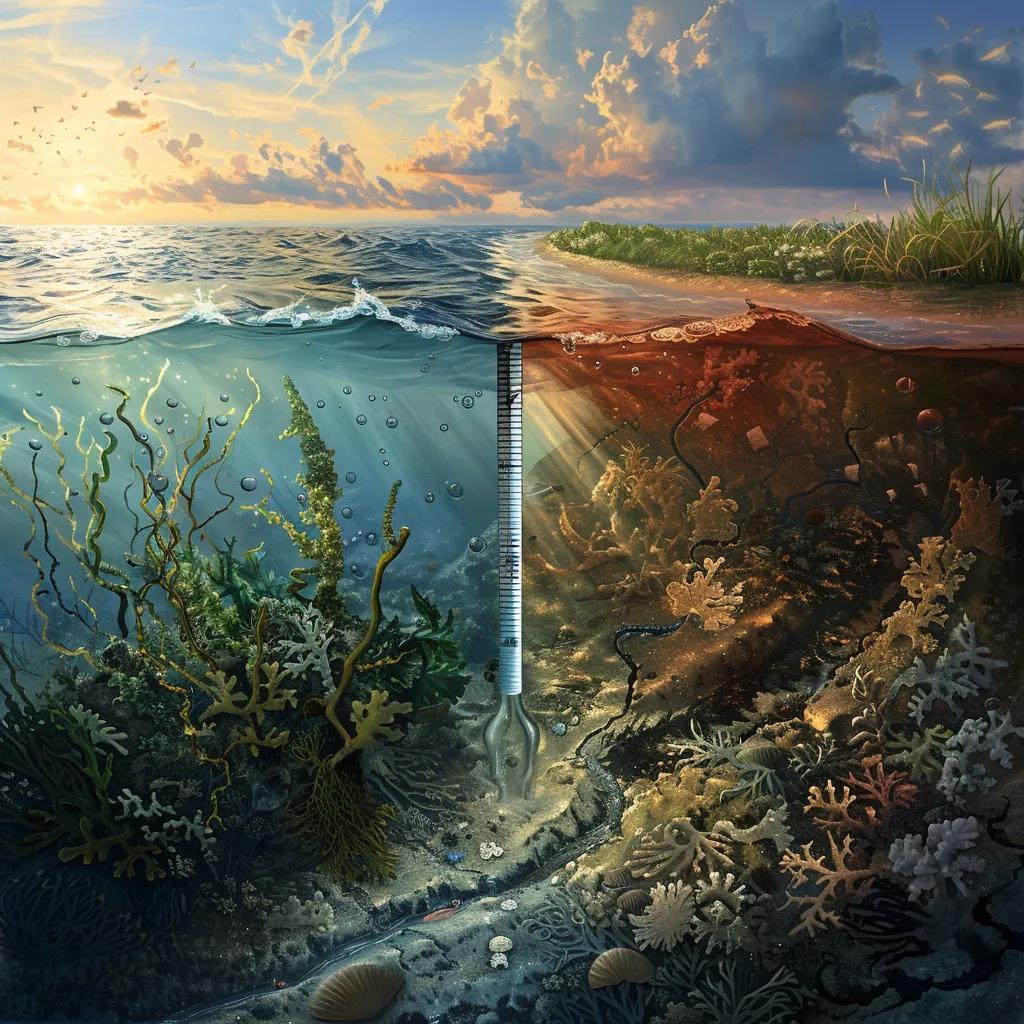
Sargassum blooms have grown in frequency and magnitude due to three interrelated factors:
Climate change warming tropical waters, accelerating algal growth rates.
Nutrient enrichment from agricultural runoff (nitrogen and phosphorus) fueling proliferation.
Altered ocean currents and upwelling patterns distributing blooms more widely.
Rising sea-surface temperatures raise metabolic rates for Sargassum, while nutrient pulses from coastal agriculture and river plumes create ideal growth conditions. These drivers combine to generate record blooms, nearly doubling in biomass since 2011 and culminating in an estimated 20 million tons crossing the Atlantic in 2023.
Sargassum Bloom Drivers
Climate change, nutrient enrichment from agricultural runoff, and altered ocean currents are the main factors that have increased the frequency and magnitude of Sargassum blooms. Rising sea-surface temperatures and nutrient pulses create ideal growth conditions, leading to record blooms.
Wang, M., et al., "The Great Atlantic Sargassum Belt." (2019)
This research supports the article''s claims about the causes of Sargassum blooms, which are essential for understanding the problem.
With bloom causes outlined, the next step is to determine when and how to monitor these influxes.
When Is Sargassum Season in Punta Cana and How Can You Monitor It?
Sargassum typically appears in Punta Cana between late spring and early autumn, but peak months and real-time forecasts enable proactive planning for tourism operators and coastal managers.
What Are the Typical Sargassum Peak Months in Punta Cana?
Below is a seasonal overview of Sargassum strandings based on historical observations and satellite data:
Month |
Strandings Level |
Impact Reason |
|---|---|---|
April–May |
Moderate influx |
Early bloom phase as waters warm |
June–September |
Peak accumulation |
Maximum growth under high temperature/nutrients |
October |
Declining mats |
Breakdown begins with shifting currents |
November |
Low to moderate residual presence |
Cooler sea-surface temperatures |
Seasonal patterns indicate that visitors and resort operators should heighten monitoring between June and September, when dense mats are most likely to mar beach sceneries and guest experiences.
Anticipating this seasonality relies on specialized monitoring systems and forecast tools.
Which Tools and Forecasts Help Track Sargassum Influx?
Several platforms provide near-real-time Sargassum forecasts and satellite imagery:
Sargassum Watch System (SaWS): University of South Florida’s portal offering weekly distribution maps.
NOAA Sargassum Advection Reports: Biweekly bulletins projecting drift trajectories.
SAMtool: Satellite-based assessment of bloom intensity and location.
Accessing these tools enables early warnings for beach managers and tourism stakeholders, bridging the gap between detection and on-the-ground response.
Armed with forecasts, both tourists and businesses can adjust schedules and resource allocations for cleanups and activities.
What Are the Environmental Impacts of Sargassum on Punta Cana Beaches?
When Sargassum mats strand and decompose, they alter coastal ecosystems, threaten coral reefs, and contribute to greenhouse gas emissions that compound global environmental challenges.
How Does Sargassum Affect Marine Ecosystems and Coral Reefs?
Stranded Sargassum blocks sunlight from reaching seagrass beds and coral colonies, disrupting photosynthesis and habitat structure. Dense mats can:
Smother juvenile corals, causing bleaching and reduced calcification.
Displace seagrass meadows that serve as nurseries for fish and sea turtles.
Alter benthic communities by increasing organic decomposition on the seabed.
These impacts undermine the biodiversity and resilience of Punta Cana’s nearshore marine ecosystems, compromising critical environmental services.
Impacts on Marine Ecosystems
Stranded Sargassum can block sunlight, smother juvenile corals, and displace seagrass meadows, disrupting the biodiversity and resilience of marine ecosystems. The decomposition of Sargassum also releases harmful gases, contributing to environmental and health issues.
Lapointe, B. E., et al., "Nutrient-Enhanced Sargassum Blooms in the Caribbean Sea." (2019)
This study provides evidence of the environmental impacts of Sargassum, which is crucial for understanding the consequences of the blooms.
As these mats decompose, they release potent gases that further stress coastal and atmospheric systems.
What Is the Role of Methane and Other Emissions from Decomposing Sargassum?
Decomposing Sargassum produces methane and carbon dioxide—potent greenhouse gases—and releases hydrogen sulfide and ammonia into the air. These emissions can:
Create low-oxygen “dead zones” in nearshore waters, harming fish and invertebrates.
Contribute to local methane fluxes that exacerbate climate warming.
Generate foul odors that deter tourism and pose respiratory irritants.
This chemical breakdown links the coastal phenomenon directly to global atmospheric processes and local environmental health.
How Does Sargassum Contribute to Coastal Erosion in Punta Cana?
Accumulated Sargassum mats trap water against the shoreline, increasing wave drag and sediment mobilization. Over time, this process:
Undercuts sandy berms, reducing natural beach buffers.
Alters shoreline profiles, encouraging scarp formation.
Increases long-term vulnerability to storm surge and sea-level rise.
These physical changes compound beach loss, requiring more frequent nourishment programs to maintain resort-quality sand expanses.
How Does Sargassum Affect the Economy and Tourism Industry in Punta Cana?
Economic and Tourism Repercussions
Sargassum strandings lead to significant cleanup costs for hotels and resorts, deter visitors, and strain local businesses. These factors create a ripple effect through the regional economy, impacting tourism and related industries.
Sargassum Watch System (SaWS), University of South Florida.
This source provides information on the economic impacts of Sargassum, which is essential for understanding the consequences of the blooms.
What Are the Costs of Sargassum Cleanup for Hotels and Resorts?
Hotels and beachfront resorts often deploy staff, heavy equipment, and disposal services to clear mats daily during peak bloom periods. Typical expenses include:
Labor and machinery rental: Up to $50,000 per month for large properties.
Waste transport and disposal fees: $20–$30 per ton of collected seaweed.
Lost revenue from temporarily closed beach sections during intensive cleanup.
These operational costs can exceed $100 million annually across the Dominican Republic and account for approximately 10–15 percent of tourism-related GDP losses during bloom peaks.
How Does Sargassum Impact Tourist Bookings and Visitor Experience?
Visible Sargassum mats, foul odors, and restricted beach access prompt cancellations and negative reviews. Analyses show:
Booking declines of 20–30 percent at resort destinations during heavy bloom months.
Guest satisfaction scores dropping by about 0.5 points on a five-point scale due to odor and aesthetics.
Event postponements or relocations by travel agencies seeking pristine beach venues.
These trends underscore Sargassum’s disruptive influence on travel patterns and revenue streams.
What Are the Effects on Local Businesses Like Fishing and Water Sports?
Fishing operations face gear fouling and reduced fish landings when Sargassum mats alter nearshore habitats. Meanwhile, water-sport providers experience:
Frequent cancellations of snorkeling and diving trips to avoid low-visibility zones.
Equipment maintenance surges due to seaweed clogging intake valves.
Revenue drops of up to 20 percent during peak influx months.
These cascading impacts emphasize Sargassum’s broad economic footprint, affecting service providers beyond beachfront hotels.
What Health Risks Does Sargassum Pose to Residents and Tourists in Punta Cana?
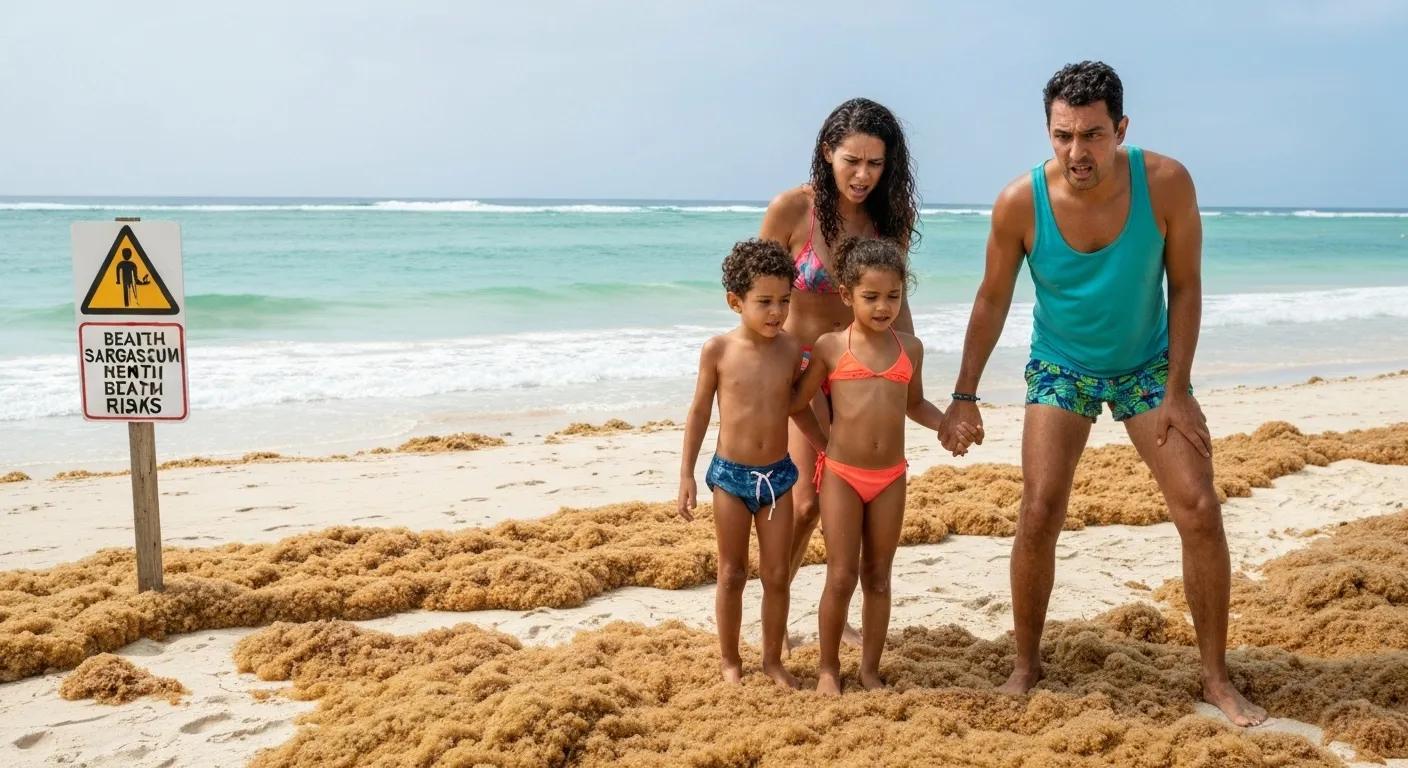
Decomposition of Sargassum releases chemicals that can irritate respiratory systems, provoke skin reactions, and trigger neurological symptoms in sensitive individuals.
What Symptoms Are Caused by Hydrogen Sulfide and Ammonia from Sargassum?
Respiratory irritation, coughing, and breathlessness.
Headaches, nausea, and dizziness due to neurological effects.
Skin irritation and conjunctivitis on direct contact.
These acute symptoms may escalate in poorly ventilated resort areas, highlighting the importance of early removal and air-quality monitoring.
Who Are the Most Vulnerable Populations to Sargassum Exposure?
Children, pregnant women, seniors, and individuals with asthma or cardiovascular conditions face elevated risk from Sargassum emissions. Their heightened sensitivity can lead to:
Exacerbated asthma attacks and bronchial constriction.
Increased incidence of skin and eye irritation.
Greater susceptibility to neurological symptoms at lower gas concentrations.
Identifying these groups supports targeted advisories and safety protocols.
What Protective Measures Can Minimize Health Risks?
Install portable air purifiers in beachfront common areas.
Provide N95 or activated-carbon masks to staff and vulnerable guests.
Post clear signage around decomposing mats to prevent close contact.
Schedule beach access during periods of minimal decomposition activity.
These steps safeguard public health and maintain confidence in Punta Cana as a safe tourism destination.
What Are the Current Management and Mitigation Strategies for Sargassum in Punta Cana?
A combination of manual cleanup, physical barriers, offshore removal, and valorization efforts is advancing local and national resilience to Sargassum influxes.
How Do Beach Cleanups and Floating Barriers Help Manage Sargassum?
Manual raking and the deployment of floating booms intercept mats before they reach shore:
Crews remove seaweed by hand or with tractors, restoring beach aesthetics.
Floating barriers divert incoming mats into collection zones offshore.
Regular maintenance of barriers ensures continuous protection against new mats.
These methods provide immediate relief by preventing beach strandings and reducing decomposition odors onshore.
What Innovative Offshore Collection Solutions Are Being Developed?
Companies are piloting specialized vessels and anchorage systems to harvest Sargassum before it lands:
SOS Carbon’s offshore skimming vessels collect algae in open water, reducing on-beach volume.
Modular collection platforms funnel mats into barge-mounted conveyors for processing.
Autonomous drones monitor bloom density and guide collection operations.
These technologies promise to shift mitigation efforts from reactive beach cleanups to proactive removal at sea.
How Is Sargassum Being Valorized into Biofuel and Fertilizer?
Research projects are converting Sargassum into renewable biofuel and soil amendments:
Fermentation processes extract biogas, yielding methane for energy generation.
After heavy-metal testing and arsenic mitigation, dried Sargassum is pelletized into fertilizer.
Pilot programs blend seaweed biochar into agricultural soils to enhance water retention.
Valorization not only reduces disposal costs but also transforms an environmental hazard into economic opportunity.
What Are the Roles of Government and International Cooperation?
The Dominican Republic’s Ministry of Environment and Asonahores (hotel association) co-lead multisectoral task forces that:
Establish national Sargassum monitoring networks linked to international research labs.
Secure funding for offshore collection trials and valorization plants.
Coordinate emergency response protocols for heavy bloom events.
International partnerships with NOAA, USF Optical Oceanography Lab, and regional tourism bodies drive research and capacity building, strengthening resilience across the Caribbean.
Which Beaches and Resorts in Punta Cana Are Least Affected by Sargassum?
Some coastal areas and properties benefit from geography or proactive measures that keep Sargassum strandings to a minimum, offering more reliable beach conditions.
What Are the Best Sargassum-Free Beaches Near Punta Cana?
Unexposed coves and channels with natural current protection typically see fewer mats:
Bayahibe Beach: Sheltered bay with direct currents carrying mats away.
Macao Beach: Open Atlantic exposure disperses algae offshore.
Uvero Alto: Coastal configuration reduces mat accumulation on sand.
Visiting these locations during peak bloom months can improve the likelihood of a pristine beach experience.
How Are Resorts Implementing Sargassum Barriers and Cleanup Efforts?
Leading properties combine floating booms and rapid response crews to maintain clear shorelines:
Floating nets positioned at reef edges intercept mats before landfall.
Dedicated beach-cleaning teams operate around the clock during high-influx periods.
Guest communications update visitors in real time on beach conditions and cleanup schedules.
These integrated approaches minimize visitor disruption and preserve resort reputations for beachfront quality.
What Alternative Activities Are Available During High Sargassum Periods?
When seaweed covers the sand, Punta Cana’s inland and sea-based attractions provide diversions:
River and cenote excursions through the Anamuya Mountains.
Golf courses and spa retreats featuring air-conditioned facilities.
Catamaran snorkel tours to offshore reefs beyond Sargassum mats.
These options ensure that visitors can enjoy the region’s natural and recreational offerings, regardless of beach conditions.
Understanding causes, timing, impacts, and solutions equips stakeholders to manage Sargassum with resilience and innovation.
Sargassum remains an evolving challenge for Punta Cana, but ongoing research, advanced removal techniques, and strategic forecasting empower communities to safeguard beaches and tourism. By combining proactive monitoring, diversified activities, and sustainable valorization efforts, Punta Cana can adapt to seasonal blooms and maintain its status as a premier Caribbean destination.
Frequently Asked Questions
What are the long-term ecological effects of Sargassum on Punta Cana''s marine life?
The long-term ecological effects of Sargassum on Punta Cana''s marine life can be significant. Prolonged exposure to dense mats can smother coral reefs and seagrass beds, disrupting the habitats essential for various marine species. This can lead to decreased biodiversity, as fish and invertebrates lose their breeding and feeding grounds. Additionally, the decomposition of Sargassum releases harmful gases, which can further stress marine ecosystems and contribute to the decline of sensitive species, ultimately affecting the overall health of the marine environment.
How can tourists stay informed about Sargassum conditions during their visit?
Tourists can stay informed about Sargassum conditions by utilizing several online resources and mobile applications. Websites like the Sargassum Watch System (SaWS) and NOAA provide real-time updates and forecasts on Sargassum presence. Additionally, many resorts and local tourism boards offer alerts through social media and their websites. Tourists can also inquire at their accommodations for the latest information and recommendations on beach conditions, ensuring they can plan their activities accordingly.
What role do local communities play in managing Sargassum issues?
Local communities play a crucial role in managing Sargassum issues through grassroots initiatives and collaboration with government agencies. Community members often participate in beach cleanups, raising awareness about the environmental impacts of Sargassum. They can also advocate for sustainable practices in agriculture and waste management to reduce nutrient runoff, which contributes to Sargassum blooms. By engaging in local decision-making processes and supporting eco-friendly tourism, communities can help mitigate the effects of Sargassum on their environment and economy.
Are there any health risks associated with recreational activities during Sargassum blooms?
Yes, there are health risks associated with recreational activities during Sargassum blooms. The decomposition of Sargassum can release harmful gases like hydrogen sulfide and ammonia, which may cause respiratory issues, skin irritation, and other health problems, particularly for sensitive individuals. Tourists engaging in water sports or spending extended periods on the beach during heavy blooms should be cautious. It is advisable to monitor air quality and avoid areas with strong odors or visible mats to minimize exposure to these harmful emissions.
What innovative technologies are being developed to combat Sargassum?
Innovative technologies being developed to combat Sargassum include specialized offshore collection vessels and automated monitoring systems. Companies are testing skimming vessels designed to harvest Sargassum before it reaches shore, significantly reducing beach strandings. Additionally, autonomous drones are being utilized to monitor bloom density and guide collection efforts. These advancements aim to shift the focus from reactive cleanup to proactive management, enhancing the efficiency of Sargassum mitigation strategies and protecting coastal environments.
How can Sargassum be utilized for economic benefits?
Sargassum can be transformed into economic opportunities through valorization processes. Research is underway to convert Sargassum into renewable biofuels and organic fertilizers. By fermenting Sargassum, biogas can be produced for energy generation, while processed seaweed can be used as a soil amendment in agriculture. These initiatives not only provide a sustainable solution for disposal but also create new revenue streams, turning an environmental challenge into a resource that benefits local economies and promotes sustainability.
Conclusion
Addressing the Sargassum challenge in Punta Cana is essential for preserving both the environment and the local economy. By understanding its causes, impacts, and effective management strategies, stakeholders can mitigate disruptions and enhance visitor experiences. Embracing proactive measures and innovative solutions will ensure the region remains a sought-after destination. Discover more about how to navigate Sargassum''s effects and explore alternative activities during peak seasons.
Answer to this question
Related questions
"The specs say this model has 2 USB ports. The one I received has none. Are they hidden somewhere?"
"Is this just the monitor?"
"Does this include the keyboard and mouse?"
Comentarios
Marilyn Dates Green
Good afternoon checking availability for 2 pickup September 20th and depart September 23. Destination Majestic Mirage
Rick
Need transfer from PUJ to Majestic Mirage in 3/9/24 and departing on 3/16/24. Can you recommend transportation?
Sargassum impact on punta cana beaches
By Punta Cana transfer Sargassum mats blanketing Punta Cana’s shorelines have surged i...
Prime Traveler Redaction
· 15 min read
Need help?
If you have questions about your booking or need assistance in Punta Cana, our team is ready for you.
Talk to support